.png)
Beyond: Transformative Art Inquiry Lab
for Early Childhood
What's New!
_edited.jpg)
Relational Encounter
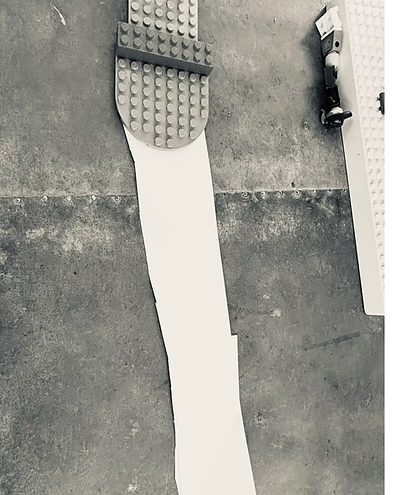
He seemed already ready to dig, waiting only to hear “YES” from me. His question sounded less like asking what he could do and more like seeking confirmation of permission or restriction..
.png)
.png)
.png)
Beyond begins by revisiting what might otherwise be overlooked. We value children’s emergent encounters, unfinished traces, and unexpected creations—not by asking whether they meet predetermined expectations, but by attending to what they are and what they might become. Through deep encounters with materials and connections across artistic disciplines, materials, and ways of making, Beyond explores how children’s work can continue, transform, and assemble into possibilities that not yet imagined.
Newsletter
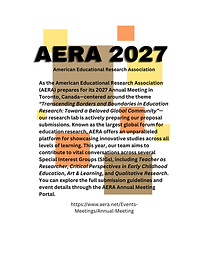
Published every two months, Beyond Letter gathers the ideas, encounters, developments, and opportunities that have emerged across our growing community—connecting art, early childhood, research, and practice while looking toward what might come next.
.png)
.png)
Our Story
Get to Know Us
Beyond: Transformative Art Inquiry Lab for Early Childhood is an independent, research-based digital platform that explores transformative approaches to art in early childhood education through interdisciplinary inquiry. Grounded in decolonizing, relational reality, new materialism, critical posthuman, and postmodern perspectives, the platform understands learning, creativity, and inquiry as emerging from relationships among humans, materials, and environments in the more-than-human worlds. It is committed to creativity by paying attention to uncertainty, the unknown, and emergence beyond established educational and disciplinary boundaries.
Beyond: Transformative Art Inquiry Lab for Early Childhood invites educational leaders to recognize art as the site of coexistence, where they can actively acknowledge the intra-connectedness and interconnectedness of the world. Through continued interest in innovative perspectives from different works, the platform supports a diverse and transformative turn toward future possibilities in early childhood art.
Our Mission
Beyond: Transformative Art Inquiry Lab for Early Childhood is dedicated to reimagining art with education and education with art. We empower educators to become creative researchers, exploring new approaches to learning through artistic practices while advocating for ethical creativity, challenging norms, and bridging academia and practice through transformative inquiry.

For Educators
Seeing Differently, Working with Materials, Expanding Possibilities
through Artistic Lens
An artistic lens invites educators to recognize uncertainty as a space of unknown possibility—where unexpected encounters with materials, ideas, and forms can open new ways of seeing, thinking, and creating. By remaining open to what is not yet known, educators can create conditions for children’s own ideas, material encounters, and artistic possibilities to emerge and expand.

VALUE
KNOW
EXPAND
Notice what might otherwise be overlooked.
Value unexpected, unfinished, or unfamiliar outcomes without deciding too quickly what they mean or what they should become.
Encounter Material Deeply
Attend to how each material behaves, responds, resists, transforms, and reveals possibilities of its own.
Bring possibilities into
new relationships.
Connect materials, forms, genres, and ideas so that children’s work can move beyond familiar boundaries and develop in unforeseen directions.
Relational Encounters

This section reimagines the current state of contemporary early childhood art and shifts toward art through critical lenses.
Beyond Artist's Lens

A dedicated space for educators to deepen their pedagogical knowledge, refine observation and documentation skills, and confidently guide children’s creative inquiry journeys.
Call for Voices

Contribution Due: October 4, 2026
Submit Your Inquiry Reflections, Writing, & Visual Essays
Beyond Research Lab
Beyond is a research-informed curatorial and inquiry platform reimagining art in early childhood through relational, material, and transformative perspectives. We connect contemporary art, educational research, and pedagogical practice to explore what becomes possible when children, educators, materials, and worlds are understood as entangled participants in inquiry.

Our Commitments
Transformative Perspectives on
Contemporary Early Childhood Art
The Paradigm Shift: Moving away from "cute aesthetic products" and linear developmental milestones, toward art as a deeply political, ethical, and world-making practice. We interrogate the contemporary landscape of early childhood art education and outline how our framework actively reimagines it. For decades, creative practices in the early years have been confined within outdated, Eurocentric, and adult-dominated frameworks. These traditional models frequently reduce children's profound creative expressions to standardized metrics, passive compliance, or romanticized notions of innocence. Beyond: Transformative Art Inquiry Lab explicitly seeks to break out of these constraints. We propose that early childhood art is not a superficial classroom hobby, but a vital site of critical inquiry, decolonial material entanglement, and postmodern pluralism.

1. Decolonizing the Palette: Shifting Beyond Anthropocentric Representation The Critique: Traditional frameworks reduce creative mediums to mere human-centric tools meant to represent or capture a separate world from a position of mastery. This anthropocentric approach—heavily reliant on sanitized, corporate, and plastic-packaged art supplies—subtly trains children to view the earth as a passive resource to be categorized, dominated, and consumed. The Commitment: We move away from representation toward co-composition. By disrupting the illusion of human dominance and stripping away the barrier of commercialized art products, we welcome raw, unrefined, and localized materialities back into the space. Art becomes an ethical, relational encounter where children re-link with earthly realities.

2. Postmodern Pluralism: Shattering the Universal Milestone The Critique: Dominant developmental psychology forces children’s art into rigid, linear, age-based stages, judging a child's expression solely by what it fails to realistically represent. This metanarrative overlooks the complex ways young children actually map out their worlds. The Commitment: We completely reject these universal milestones. Through a postmodern lens, we celebrate the messy, non-linear, and fragmented ways young children communicate. We favor a pluriverse over a single standard of progress—creating alternative inquiry spaces where multiple truths and diverse ways of knowing can vibrantly coexist.

3. Uncertainty, Emergence, and the Unknown: We embrace uncertainty, emergence, and the unknown as generative conditions of artistic inquiry. Rather than directing children's encounters toward predetermined outcomes, we attend to possibilities that arise unexpectedly through evolving relations among children, materials, spaces, and time. What emerges cannot always be anticipated—and this openness to what is not yet known is where transformative possibilities can begin.


Beyond
This section gathers scholarly works that move beyond predetermined boundaries toward emerging ways of thinking, creating, and worldmaking through interdisciplinary journals and inquiries exploring decolonizing, relationality, art, material agency, and transformative possibilities in art for early childhood.
-
Curatorial Review: Legitimacy of Uncertainty and Emergence
Embracing Uncertainty in Research with Young Children, Liz Chesworth
-
Curatorial Review: Beyond Pre-Existing Child
Posthuman Child: Implications for pedagogy and educational research? Karen Murris
-
Curatorial Review: The Post World- Early Childhood
Becoming a “Mutated Modest Witness” in Early Childhood, Jayne Osgood

-
Curatorial Reflection: In-between Seeing and Reading
Cy Twombly and Children’s Traces Beyond Representational Uncertainty, Katherine H Oh
A curatorial space for historical and contemporary artistic practices that invite unfinished, experimental, and interdisciplinary ways of thinking about art in early childhood. Through encounters with visual culture, contemporary art, material experimentation, and aesthetic discourse, this section explores how creative works can provoke new perspectives, challenge predetermined assumptions, and open transformative possibilities for art inquiry in early childhood education.
The Unfinished
Research & Project for Early Childhood
Transformative Art Inquiry Lab
COMING SOON
Projects
COMING SOON
The Studio of
Relational Reality
COMING SOON


Research & Project for Early Childhood is the core laboratory of Beyond, dedicated to investigating and developing transformative approaches to art in early childhood education. Through critical perspectives, relational encounters, academic rigor, and participatory observation, the lab explores possibilities that extend beyond preexisting educational paradigms and conventional understandings of creativity.
Questions Beyond
Questions Beyond is a space for Questions and Responses (Q&R)
that invites educators, artists, researchers, students,
and communities to share topics, encounters, ideas,
or uncertainties they wish to explore more deeply.
Please leave the questions, concepts, or inquiries you would like to dive into, and Beyond will respond through curatorial reflection, interdisciplinary dialogue, and relational inquiry.